

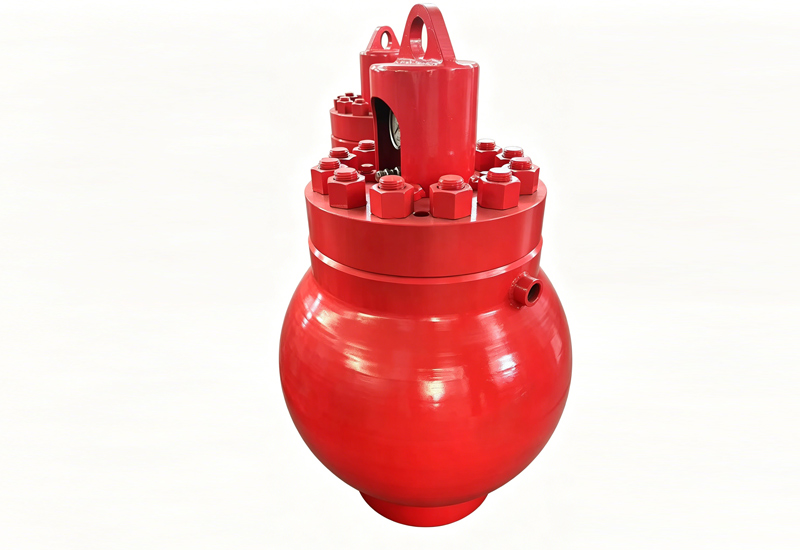
Tested second hand beam pump jack units ready for oilfield deployment are an increasingly practical solution for operators
seeking reliable artificial lift equipment at a lower capital cost. In mature oilfields, marginal wells, and field expansions, a
properly inspected, refurbished, and field-tested beam pump jack can deliver dependable production support without the lead time and
expense associated with brand-new equipment. For many upstream operations, the ability to source a used beam pump jack unit
that has been tested for oilfield deployment creates a balance between performance, availability, and budget control.
This page provides general industry information about second hand pump jack units, including definition, working principle,
advantages, common specifications, inspection criteria, selection factors, and deployment considerations. The content is designed to be
SEO-friendly, easy to place into a directory page or industry article, and suitable for search engines to index. It avoids specific company
recommendations and focuses only on universal technical and commercial knowledge.
A beam pump jack unit, also called a pumpjack, nodding donkey, or mechanical
oil well pumping unit, is a surface pumping device used to lift fluids from wells when natural reservoir pressure is insufficient.
A second hand beam pump jack unit is a previously used unit that has been removed from service, inspected, repaired if
necessary, and prepared for reuse.
When a used unit is described as tested, it generally means the equipment has undergone functional checks, mechanical
inspection, and often load or cycle testing to verify that major components are operational and suitable for oilfield deployment. This
testing may include motor performance checks, gearbox condition verification, structural inspection, lubrication review, brake testing,
alignment assessment, and surface-level operational tests.
In practical terms, a tested second hand beam pump jack unit ready for oilfield deployment is not simply “old equipment.”
It is a pre-owned artificial lift system that has been evaluated to confirm that it can be installed, connected, and returned to production
with reduced uncertainty.
The market for used oilfield pump jacks remains active because many wells do not require brand-new lifting equipment to
operate effectively. In mature basins and low-to-medium production environments, companies often prioritize equipment that is:
A properly prepared second hand beam pump jack can serve these needs well. Since pump jacks are designed for long service
life and relatively straightforward maintenance, many units can be refurbished, reconditioned, and redeployed successfully. This makes
them attractive for operators managing capital expenditures while still requiring dependable field equipment.
A beam pump jack uses a surface-driven reciprocating motion to operate a downhole pump. The system typically includes a motor,
gearbox, crank arms, pitman arms, walking beam, horsehead, polish rod connection, and foundation. The motor turns the gearbox, which
converts rotary motion into the oscillating motion of the beam. This movement drives the sucker rod string, which in turn actuates the
downhole pump to lift formation fluids to the surface.
This type of artificial lift is widely used because it is mechanically robust and adaptable to many well conditions. Even a
used beam pump jack unit can remain highly effective when matched correctly to well depth, fluid load, stroke length,
and pumping speed.
Choosing a tested used beam pump jack offers several practical benefits. These advantages are relevant for operators,
distributors, field service teams, and procurement departments looking for dependable oilfield equipment.
| Advantage | Description | Operational Value |
|---|---|---|
| Lower capital cost | Used units generally cost less than new artificial lift equipment | Helps reduce upfront investment and preserve budget |
| Faster availability | Ready-to-deploy inventory can often be shipped sooner | Shortens lead time for urgent well projects |
| Field-proven design | Beam pump jacks are mature, well-understood systems | Supports dependable operation and easier maintenance |
| Suitable for mature wells | Many producing wells do not require brand-new lift systems | Ideal for declining production and secondary recovery |
| Refurbishment potential | Major components can often be repaired or replaced | Extends service life and improves return on investment |
| Lower total project cost | Savings may extend beyond the purchase price | Can reduce installation and replacement expenses |
Another major benefit is flexibility. The oilfield often requires different solutions for different wells. A second hand beam pump
jack may be ideal for one site while a different artificial lift method works better elsewhere. This allows operators to match
equipment to actual field conditions rather than overinvesting in a new system that may exceed requirements.
Tested second hand beam pump jack units ready for oilfield deployment are commonly used in a wide range of upstream
applications. While every field is different, typical use cases include:
These units are particularly useful where well performance is stable and predictable. In such cases, a used oilfield pump jack
can provide a practical balance between production support and economic efficiency.
Beam pump jack units come in several general configurations. The exact design affects torque, balance, installation requirements,
and pumping performance. The most common types include:
| Type | General Description | Typical Use |
|---|---|---|
| Conventional beam pump jack | Standard pumping unit with a walking beam and crank system | Widely used for general oilfield applications |
| Long-stroke pumping unit | Designed for longer stroke lengths and slower cycles | Useful for deeper wells and improved rod-life management |
| Crank-balanced unit | Uses counterweights on cranks for load balancing | Common in standard production operations |
| Mark-style unit | Widely recognized beam pump configuration with proven field performance | General-purpose artificial lift |
| Reverse or specialized design | Less common configurations intended for specific well conditions | Custom or application-specific deployment |
When purchasing a second hand pump jack unit, it is important to understand the original design and whether it fits the
intended well depth, production rate, and environmental conditions.
In the used oilfield equipment market, the word tested should have a clear and meaningful definition. Buyers should look
for evidence that the unit has not only been cleaned or repainted, but also examined for operational readiness.
A meaningful testing process may include:
Buyers should distinguish between tested, refurbished, reconditioned, and as-is
equipment. A tested unit has gone through verification steps intended to confirm that it can function as expected in the field.
Before a used beam pump jack is deployed, the following inspection points are typically evaluated to reduce risk and improve
reliability.
| Inspection Area | What to Check | Why It Matters |
|---|---|---|
| Structural frame | Cracks, corrosion, deformation, weld integrity | Ensures load-bearing safety and long-term durability |
| Gearbox | Oil level, seal condition, noise, wear, backlash | Critical for power transmission and smooth operation |
| Motor | Startup performance, amperage, overheating, insulation condition | Affects energy efficiency and operational reliability |
| Cranks and counterweights | Balance, wear, cracks, weight security | Helps reduce vibration and mechanical stress |
| Pitman arms | Alignment, pin wear, joint condition | Important for safe motion transfer |
| Walking beam and horsehead | Surface damage, wear points, structural condition | Supports proper rod movement and system balance |
| Brake system | Holding capability and wear condition | Essential for safe maintenance and shutdown |
| Foundation interface | Mounting points and base alignment | Affects installation quality and stability |
Specifications vary widely depending on the original design, manufacturer, duty rating, and size. The following table shows common
specification categories that are often used when evaluating a second hand beam pump jack ready for deployment.
| Specification | Typical Range or Description | Selection Consideration |
|---|---|---|
| Horsepower | Varies by model and application | Must match lifting load and motor requirements |
| Stroke length | Short, medium, or long stroke configurations | Should suit well depth and production behavior |
| Stroke rate | Cycles per minute adjusted to well needs | Important for production rate and rod load control |
| Unit size | Small, medium, or large mechanical frame | Affects capacity and installation footprint |
| Maximum polished rod load | Model-dependent load rating | Must not exceed equipment design limits |
| Gear reduction ratio | Designed for torque and output speed | Influences power transfer efficiency |
| Counterbalance type | Crank-balanced or other balancing method | Impacts energy consumption and smoothness |
| Mounting style | Foundation-mounted field installation | Must align with site layout and civil preparation |
The reliability of a tested second hand beam pump jack depends on more than age alone. Several factors influence whether
the unit will perform well in oilfield service.
These factors help determine whether a used beam pump jack for oilfield deployment is a smart purchase or whether the
equipment carries excessive risk.
In oilfield procurement, speed and certainty often matter as much as price. A tested second hand beam pump jack unit can
simplify project planning because the equipment is usually available sooner and its condition is already partially verified.
Procurement teams often value used equipment because it supports:
For many operators, these advantages make second hand oilfield pumping units an effective part of a broader asset strategy.
Before installation, several deployment factors should be reviewed to ensure proper operation. A beam pump jack is only as effective as
the entire system around it, including foundation, power supply, rod string, tubing, and downhole pump.
| Deployment Factor | What to Confirm | Impact on Performance |
|---|---|---|
| Foundation strength | Concrete base design and anchoring | Supports stability and vibration control |
| Power availability | Electrical service or drive compatibility | Affects startup and continuous operation |
| Well depth | Match unit capacity with downhole conditions | Prevents overload and inefficiency |
| Production target | Expected fluid rate and pump displacement | Ensures adequate lifting performance |
| Rod loading | Mechanical stress on rod string | Influences wear and service life |
| Environmental conditions | Temperature, dust, moisture, and corrosion risk | Affects maintenance and durability |
| Access for maintenance | Space for service and inspection | Supports safer, easier long-term operation |
In the used equipment market, these terms are often used together, but they do not mean the same thing.
| Condition Term | General Meaning | Buyer Implication |
|---|---|---|
| As-is | Equipment is sold in current condition without guarantee of repair | Higher risk, lower certainty |
| Inspected | Equipment has been visually or mechanically evaluated | Provides some condition awareness |
| Tested | Operational checks confirm function of key systems | Better readiness for deployment |
| Refurbished | Worn components repaired, replaced, or restored | Improved reliability and service life |
| Reconditioned | Equipment has been brought back to a functional standard | Often suitable for reinstallation |
Buyers searching for tested second hand beam pump jack units ready for oilfield deployment should usually prioritize units
that are both tested and accompanied by basic inspection details. This helps reduce uncertainty and improve purchasing confidence.
Depending on the seller and the source of the equipment, a used beam pump jack package may include some or all of the
following components:
Some units may be sold as a complete set, while others may require additional parts before they are fully ready for installation. Always
confirm package contents when evaluating second hand oilfield pump jack units.
One reason beam pump jacks remain popular is that they are relatively simple compared with many other artificial lift systems. Their
mechanical design makes them easier to inspect, maintain, and repair in the field. For operators of tested used pump jack units,
this simplicity can translate into lower maintenance complexity and shorter service interruptions.
Common maintenance tasks may include lubrication, bolt inspection, gearbox oil checks, belt alignment, bearing replacement, brake
adjustment, and periodic structural checks. Because the system is familiar to many field crews, a used beam pump jack ready for oilfield
deployment often integrates smoothly into existing maintenance programs.
When sourcing a used unit, buyers can improve outcomes by following a structured review process:
This approach helps ensure that a tested second hand beam pump jack truly fits the intended oilfield deployment scenario.
The following keyword themes are commonly associated with this subject and may help search engines understand page relevance when used
naturally in content:
To improve SEO performance, these phrases should be integrated naturally into headings, body text, image alt tags, and internal links.
Overuse should be avoided, but consistent topical coverage can strengthen relevance for queries related to beam pump jack units,
used oilfield equipment, and artificial lift systems.
Below is a generic example of how used beam pump jack specifications may be presented on a catalog or industry page. Values are shown as
descriptive ranges rather than exact model claims.
| Specification Category | Typical Description |
|---|---|
| Equipment type | Beam pump jack / mechanical pumping unit |
| Condition | Used, tested, ready for field deployment |
| Application | Oilfield artificial lift |
| Drive method | Electric motor or equivalent surface drive |
| Structure | Steel frame with walking beam and crank mechanism |
| Capacity | Model-dependent, suited to specific well loading |
| Installation | Foundation-mounted surface unit |
| Testing | Functional and mechanical inspection completed |
| Deployment status | Ready for oilfield installation subject to site compatibility |
When evaluating a tested second hand beam pump jack unit, buyers often consider these value drivers:
These factors are often more important than age alone. A well-maintained unit with verified testing can be more useful than a newer unit
with unknown history.
Tested second hand beam pump jack units ready for oilfield deployment remain a practical and widely relevant option in
the upstream oil and gas sector. They offer a combination of affordability, operational familiarity, and fast availability that suits
mature fields, marginal wells, and budget-conscious projects. When properly inspected, tested, and matched to the right application,
a used beam pump jack unit can deliver dependable artificial lift performance and extend the productive life of a well.
For blogs, catalog pages, industry landing pages, and equipment directories, this topic provides strong SEO potential because it aligns
with high-intent search terms related to used oilfield equipment, beam pump jack units,
artificial lift systems, and oilfield deployment. The most effective content emphasizes technical clarity,
condition transparency, and practical application details. By focusing on tested readiness, structural integrity, and field suitability,
this subject remains highly relevant for operators seeking efficient and reliable production solutions.
```
Этот веб-сайт использует файлы cookie, чтобы обеспечить вам максимально эффективное использование нашего веб-сайта.


 English



 WhatsApp
 телефон
Комментарий
(0)