

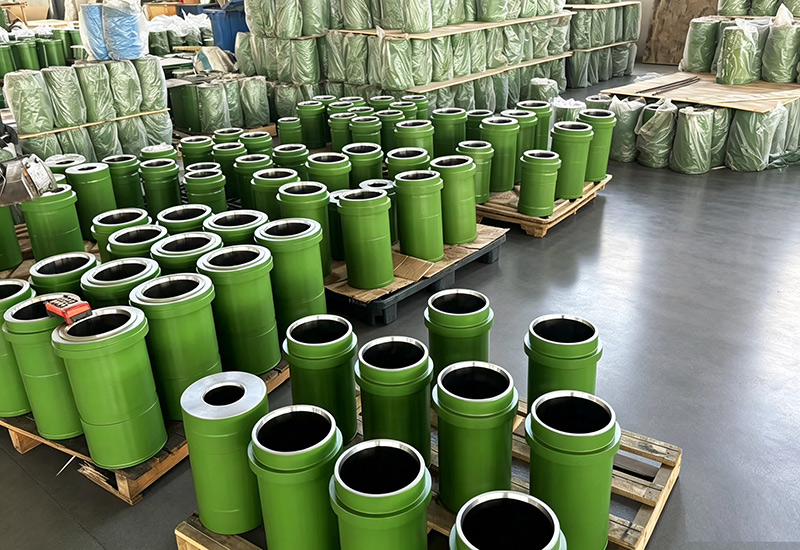
The Deep Rock Drilling BW850 Triplex Mud Pump is widely discussed in the drilling industry as a
high-performance solution for demanding borehole operations where high pressure output, stable
flow delivery, and reliable slurry circulation are essential. In modern drilling projects, especially those that
involve deep rock formations, mineral exploration, geotechnical investigation, water well drilling, and foundation
engineering, the mud pump plays a critical role in maintaining drilling efficiency and hole stability.
This industry guide provides general, SEO-friendly information about BW850 triplex mud pumps,
their working principle, core advantages, common specifications, application areas, selection factors, maintenance
points, and performance-related terms. It is designed for use in blogs, category pages, product detail pages,
industry resource pages, and other content sections intended for search engine indexing. No specific company
recommendation is included. The content is focused on industry-wide knowledge, making it suitable
for readers who want to understand high pressure mud pump output and related drilling equipment
concepts.
A BW850 triplex mud pump is a positive displacement pump commonly used in drilling systems to
circulate drilling fluid, also known as mud, through the drill string and back to the surface. The word
triplex means the pump uses three pistons or plungers working in a coordinated cycle, which helps
produce smoother flow, better pressure control, and high discharge performance.
The “BW850” designation generally refers to a pump model category associated with a rated output level around
850 liters per minute under certain operating conditions, although exact performance values can vary depending on
design, stroke length, piston diameter, motor power, speed, and fluid properties. In field use, the BW850 triplex
mud pump is valued for its ability to deliver high pressure output with dependable circulation,
making it suitable for medium-to-heavy drilling tasks.
In drilling operations, the mud pump is not just a support device. It is one of the central systems that enables
cuttings removal, cooling of the drill bit, pressure balancing, and borehole cleaning. For this reason, selecting a
pump with the correct capacity, pressure rating, and durability is critical to the success of the entire drilling
project.
High pressure output is one of the most important characteristics of a drilling mud pump.
Pressure determines how effectively drilling fluid can be moved through the system and how well the pump can
support deeper or more difficult formations. When drilling through hard rock, fractured layers, or deep
unconsolidated soil, a stable and sufficiently powerful mud pump helps keep the borehole clean and the drilling
process efficient.
High pressure output is especially important for:
A BW850 triplex mud pump is generally chosen because it combines relatively high flow capability with strong
pressure performance. This combination makes it a practical option for drilling contractors who need both
productivity and reliability in challenging field conditions.
A triplex mud pump operates using three reciprocating plungers or pistons. Each plunger moves in a phase sequence
so that fluid is drawn in, compressed, and discharged continuously. This creates a more consistent output compared
with single-cylinder or less advanced pump types.
Basic working process:
This cycle repeats continuously during drilling. Because the triplex structure produces overlapping strokes, the
output is more stable and less pulsating than many simpler pump configurations. That is one reason why
triplex mud pumps are widely used in demanding drilling environments.
The BW850 triplex mud pump is often preferred for its balance of performance, durability, and operational
flexibility. Below are the primary advantages associated with this pump type in general industry use.
| Advantage | Industry Benefit |
|---|---|
| High Pressure Output | Supports deeper drilling and harder formations with strong fluid delivery. |
| Triplex Design | Improves flow stability and reduces pressure fluctuation. |
| Efficient Circulation | Helps remove cuttings and maintain a clean borehole. |
| Broad Application Range | Can be used in water well, geotechnical, mining, and foundation drilling. |
| Good Wear Resistance | Designed to handle abrasive drilling fluids and demanding site conditions. |
| Stable Operation | Suitable for continuous work cycles in professional drilling projects. |
These advantages make the BW850 triplex mud pump relevant for contractors who need dependable pumping capability
under variable operating conditions. In high-pressure environments, consistency matters as much as raw power, and
the triplex configuration helps achieve both.
The BW850 triplex mud pump is used in a wide range of drilling applications where reliable fluid circulation is
required. Although exact project suitability depends on specifications and operating conditions, the pump category
is generally associated with the following uses.
| Application Area | Typical Use | Why the Pump Fits |
|---|---|---|
| Water Well Drilling | Circulating mud to clean and stabilize the borehole | Provides sufficient pressure and flow for deeper wells |
| Deep Rock Drilling | Supporting penetration through hard geological layers | High pressure output helps maintain bit performance |
| Geotechnical Investigation | Assisting core sampling and soil/rock analysis | Stable fluid delivery improves drilling control |
| Foundation Engineering | Drilling piles and structural support holes | Reliable pumping helps maintain project consistency |
| Mining Exploration | Supporting exploratory boreholes in mineral zones | Abrasive-resistant design is useful in harsh terrain |
| Directional or Specialized Drilling | Managing fluid circulation in more complex drill paths | Consistent output supports operational control |
In all these applications, the pump’s role is to ensure that the drilling fluid is delivered at the necessary
pressure and volume. Without adequate circulation, cuttings can accumulate, temperature can rise, and drilling
efficiency can decline.
When evaluating a BW850 triplex mud pump or similar equipment, buyers and engineers usually examine several
performance factors. These factors influence not only pump output but also service life, maintenance frequency,
and total operating cost.
| Performance Factor | Meaning | Impact on Drilling |
|---|---|---|
| Flow Rate | The amount of fluid moved per unit time | Affects cuttings removal and circulation speed |
| Discharge Pressure | The force used to push fluid into the drill string | Important for deep or hard rock drilling |
| Stroke Length | The distance the piston moves in each cycle | Influences fluid displacement and pumping output |
| Piston Diameter | The size of the working piston or plunger | Determines volume and pressure relationship |
| Motor Power | The energy source driving the pump | Supports high-load and long-duration operation |
| Pump Speed | The cycle rate of the pumping components | Influences output, wear, and energy use |
| Fluid Viscosity | The thickness of the drilling mud | Changes pressure requirements and flow efficiency |
These variables work together. For example, a pump may generate excellent pressure but provide lower flow at a
certain setting, or it may produce a strong volume with a lower pressure rating. The right configuration depends on
the specific drilling task.
The following table presents a general industry-style specification overview for a BW850 triplex mud pump. Exact
values may vary by manufacturer, configuration, and customization. This table is intended as a general reference
for SEO content, product comparison pages, and technical introductions.
| Specification Item | Typical Industry Range / Description |
|---|---|
| Model Type | BW850 triplex mud pump |
| Pump Structure | Triplex reciprocating pump |
| Rated Flow | Approximately 850 L/min class, depending on configuration |
| Pressure Range | High pressure output, often adapted for drilling requirements |
| Drive Method | Electric motor or diesel-driven system |
| Fluid Type | Drilling mud, water-based slurry, circulation fluid |
| Working Principle | Positive displacement reciprocating motion |
| Primary Use | Drilling fluid circulation and borehole support |
| Common Industries | Water well, mining, foundation, geological exploration |
| Wear Parts | Pistons, liners, valves, seals, and packing components |
Understanding the key components of a high pressure output mud pump helps users evaluate quality,
maintenance needs, and operating reliability. A BW850 triplex mud pump typically includes the following major
parts.
| Component | Function |
|---|---|
| Pump Body | Houses the core pumping mechanism and supports the structure. |
| Plungers or Pistons | Create the reciprocating motion that displaces fluid. |
| Liners | Protect internal surfaces from wear and abrasion. |
| Valves | Control fluid entry and discharge during the pumping cycle. |
| Valve Seats | Provide a sealing surface for valve operation. |
| Fluid End | Contains the hydraulic flow path and wear-prone parts. |
| Power End | Converts drive energy into reciprocating motion. |
| Crankshaft / Drive Assembly | Transfers mechanical force to the pumping system. |
| Seals and Packing | Help reduce leakage and maintain operating pressure. |
The fluid end is especially important because it directly handles abrasive mud and high-pressure flow. Wear
resistance in this area can significantly influence service life and maintenance intervals.
While different mud pump configurations exist, the triplex design has several widely recognized benefits in drilling
operations. These benefits contribute to its strong presence in the market for high pressure drilling support.
These advantages explain why triplex mud pumps are commonly used in modern drilling systems. For operations where
maintaining stable pressure is critical, triplex pumps are a practical and proven solution.
Choosing the right BW850 triplex mud pump or similar equipment requires more than comparing a
single output number. Users should consider the overall drilling environment, expected depth, drilling fluid
properties, power availability, and maintenance capacity.
| Selection Factor | What to Consider |
|---|---|
| Drilling Depth | Deeper holes usually require higher pressure performance. |
| Formation Hardness | Harder rock can demand stronger circulation and pumping capacity. |
| Fluid Characteristics | Thicker or more abrasive mud may require stronger wear resistance. |
| Power Source | Electric and diesel setups may affect portability and operating cost. |
| Maintenance Schedule | Routine inspection capability is essential for uptime. |
| Project Duration | Long-term projects benefit from durable, serviceable equipment. |
| Operating Environment | Temperature, dust, and terrain can influence equipment choice. |
A well-matched pump can improve productivity, reduce downtime, and lower total operating costs. In contrast, an
undersized or poorly selected pump can cause circulation problems, excessive wear, and unstable drilling
performance.
High pressure mud pumps work in tough conditions, so regular maintenance is essential. Proper care helps preserve
performance, extend service life, and reduce unexpected breakdowns. This is especially important for triplex pumps
used in continuous drilling operations.
Preventive maintenance is usually more cost-effective than emergency repair. For a BW850 triplex mud pump, regular
inspection of wear parts is particularly important because high pressure output and abrasive slurry can accelerate
component wear over time.
Like all industrial pumps, a triplex mud pump contains parts that experience wear during normal use. Managing
replacement parts is an important part of keeping the pump reliable.
| Wear Part | Role | Replacement Reason |
|---|---|---|
| Piston / Plunger | Moves fluid through the chamber | Wear from friction and pressure cycles |
| Liner | Protects the fluid end chamber | Abrasive erosion and surface damage |
| Valve Assembly | Controls suction and discharge flow | Loss of sealing efficiency |
| Valve Seat | Supports proper valve sealing | Surface wear reduces pressure integrity |
| Packing / Seal | Prevents leakage | Degrades through heat and pressure |
| Gaskets | Helps maintain joint sealing | Compression and aging over time |
Maintaining a stock of critical wear parts can reduce downtime and improve job continuity, especially on remote
drilling sites where replacement logistics may be difficult.
For content optimization, the following keyword themes are commonly associated with this topic. These terms can be
used naturally throughout headings, paragraphs, image alt text, meta descriptions, and internal links to support
organic search visibility.
| Keyword Theme | Examples |
|---|---|
| Core Product Keywords | BW850 triplex mud pump, triplex mud pump, high pressure mud pump |
| Application Keywords | deep rock drilling, water well drilling, mining exploration, foundation drilling |
| Performance Keywords | high pressure output, stable flow, strong circulation, drilling fluid delivery |
| Technical Keywords | positive displacement pump, reciprocating pump, pump flow rate, discharge pressure |
| Maintenance Keywords | mud pump maintenance, wear parts, piston liner, valve seat, seal replacement |
In SEO writing, keyword density should remain natural and readable. Overuse can hurt user experience and search
performance. The best approach is to include the main phrase and related terms in a clear, informative structure
that answers common user questions.
What is a BW850 triplex mud pump used for?
It is used for drilling fluid circulation in drilling projects such as water wells, rock drilling, geotechnical
work, and foundation applications.
Why is high pressure output important?
High pressure output supports deeper drilling, stronger cuttings removal, and better performance in hard
formations.
Is a triplex mud pump better than a single-cylinder pump?
In many industrial drilling situations, yes. Triplex pumps usually provide smoother flow, better pressure stability,
and stronger overall performance.
What affects mud pump output?
Flow rate, piston size, stroke length, pump speed, fluid viscosity, and drive power all influence output.
What maintenance is most important?
Regular inspection of liners, pistons, valves, seals, and fluid end components is essential for long-term
reliability.
The Deep Rock Drilling BW850 Triplex Mud Pump High Pressure Output concept represents an important
category of drilling equipment for industry users who need dependable fluid circulation, strong pressure
performance, and consistent field operation. In drilling environments where borehole stability, cuttings removal,
and depth capability are critical, a triplex mud pump provides an efficient and practical solution.
From deep rock drilling to water well and foundation applications, the BW850-class triplex mud pump is valued for
its high pressure output, smooth operation, and suitability for harsh working conditions. Understanding its
working principle, main components, specifications, and maintenance needs can help buyers, engineers, and project
planners make more informed decisions.
For SEO and industry content purposes, this topic offers strong keyword relevance, clear technical structure, and
broad application coverage. That makes it ideal for blogs, product categories, industry knowledge pages, and
technical resource sections aimed at search visibility and reader engagement.
```
If you want, I can also provide:
1. a more highly SEO-optimized version with title tags, meta description, and FAQ schema text, or
2. a longer 3000+ word version with more keyword variations and additional tables.
Этот веб-сайт использует файлы cookie, чтобы обеспечить вам максимально эффективное использование нашего веб-сайта.


 English



 WhatsApp
 телефон
Комментарий
(0)